
The Lawton Standard Co. is raising the standard for foundries.
From high-alloy precision to complex metallurgical castings, Lawton Standard brings generations of expertise to every pour. Whether iron or steel, we’re working to close the generation gap in foundries, bring manufacturing back onshore, and positively impact communities nationwide.
Though rooted in five generations, Lawton Standard was formed in 2019, when The C.A. Lawton Co. and Temperform, LLC joined forces. From there, they grew with like-minded foundries.
Today, Lawton Standard proudly brings together what was known as:
Each location strengthens our family of foundries, expanding our capabilities to serve your needs with unmatched quality and reliability. View the complete Lawton history here. At Lawton Standard, we’re more than a network of foundries—we’re a family grounded in shared knowledge, best practices, and a commitment to manufacturing that endures across generations.
Raising the standard in foundries by investing in technology and systems to make work safer and cleaner.
Move from a handful of foundries to an integrated supplier of castings with the same management characteristics, policies, mission, and vision.

Alex and his family’s organization have been manufacturing goods and providing services from the Green Bay, Wisconsin area since 1879. His uncle, E.W. Arndt, began manufacturing a bran dressing machine under Novelty Manufacturing Co. in De Pere, Wisconsin. During the industrial boom of the early 1880s, they expanded capabilities to include pattern making, iron foundry, machining, and engineering design. This basic model of a machinery and machine component manufacturing company has been maintained. While much has changed in manufacturing since the company began, family ownership and management have provided stability and consistent leadership.
Today, Alex Lawton is CEO of The Lawton Standard Co. and The C.A. Lawton Co. The company is still based on values of honesty, caring about employees and customers, continual improvement of products and processes, and business success. Alex and his team work daily to make the customers’ experience easier. In addition, Alex is constantly working and investing in building new capabilities to combine them with the first-rate people and assets that exist throughout our organization.
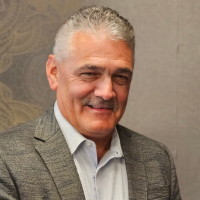
Innovative manufacturing and operations executive with extensive experience in mergers and acquisitions and integrating newly combined companies. As the President of The Lawton Standard Company, he raises the standard for foundries; he is responsible for manufacturing operations (foundries and related services such as machining and pattern making), sales, engineering, purchasing, and project management.
In Suber’s previous roles, he successfully managed iron and aluminum foundries. He is committed to achieving the highest safety, quality, and productivity. With extensive operations management experience in the automotive and heavy industry component manufacturing sectors, Suber has a strong track record.

Phil Knoebel is President of RMG and now serves on Lawton’s leadership team. He’s known for his responsive, customer-first approach—and for loving the ability to say “yes” to all our customers’ needs. When he’s not raising the standard for foundries, he’s probably chairing a non-profit board or watching McLaren racing.

Tim joined Lawton as Chief Financial Officer in 2020. Tim oversees finance, treasury, and accounting activities, is responsible for information technology, and leads the company’s merger and acquisition efforts.
Tim joined Lawton from Oakland Standard Co., where he served as a Principal responsible for sourcing, evaluating, executing, and managing investments. Tim was previously a Vice President with private equity firms Superior Capital Partners and Glencoe Capital and began his career in investment banking.
Tim holds a BBA in Finance from the University of Notre Dame and an MBA from the University of Chicago, Booth School of Business. He lives in Beverly Hills, Michigan, with his wife and three children, and serves as a chauffeur to various youth sports events on nights and weekends.

Tierney’s manufacturing history goes back to when she started on a production line as she worked on her bachelor’s and graduate degrees. She has experience in human resources, quality, and ISO auditing.
In 2021, Tierney joined Lawton Standard as Chief Administrative Officer. She is helping to grow the business by bringing the plants together on a shared path of compliance, LEAN, human resources, and quality. Tierney enjoys helping people get what they need, solve their problems, or grow and develop their career paths.
Outside of work, Tierney enjoys spending time with her immediate and extended family.
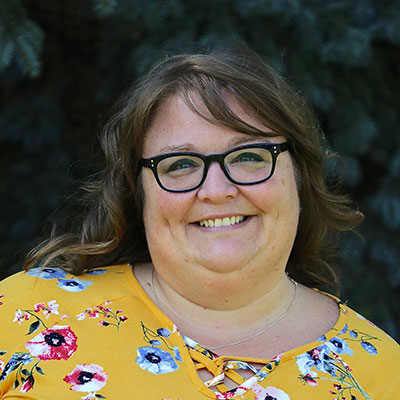
Lori joined The Lawton Standard with two decades of experience with The C.A. Lawton Co.
Lori has worked for us in HR, Accounting, and IT.

Chris Stewart is Sales Manager at RMG, where he brings a decade of experience within the company and a proven track record of delivering results across complex industrial markets. Chris is known for his ability to prioritize competing demands, lead with integrity, and guide customers toward solutions. A collaborative leader and tireless problem-solver, he’s trusted by teammates and clients alike for always getting the job done. When he’s not raising the standard for foundries, Chris is likely playing, coaching, or watching football.

RJ has a wealth of foundry experience in various roles such as engineering, sales, and management.
RJ has a Bachelor of Science degree in Mechanical Engineering from Lamar University in Beaumont, TX.

Andy has over 30 years of experience in sales and customer service at companies ranging from large, worldwide corporations to his own “one-man show” operation. Andy strives for a relationship-building experience. Since joining Lawton in 2017, he was challenged to expand the marketing program to help promote the business.

Jack McPike is the Director of Operations at Lawton Standard, overseeing the company’s foundries since November 2023. With over 20 years of experience in cast iron and steel foundry operations, he brings deep expertise in melting and molding technologies, including electric arc and induction furnaces, as well as green sand and manual molding systems.


At Lawton — In 1879, Civil War Veteran Charles Lawton and his uncle, E.W. Arndt, established the Novelty Manufacturing Company in De Pere, Wisconsin. The company’s name would later be changed to The C.A. Lawton Co. Their first invention was the “Bran Dresser,” a device designed by Lawton’s father to separate bran from flour.
What was happening in the world? 1879 was also the year that Thomas Edison invented the light bulb.
In 1885, the Statue of Liberty was gifted to the United States by France as a symbol of unity and independence.

At Lawton — In 1886, Jones Bank ran into financial difficulty and, as a result, closed its doors. Because the Novelty Manufacturing Company had taken out a loan from Jones Bank, its financial difficulty nearly caused the young company to close its doors. However, because of the generosity of local business owners, the company was able to stay afloat.
By 1890, Charles Lawton had paid off all debts owed to local businesses that had assisted the company. Lawton then went into business for himself and changed the company’s name to The C.A. Lawton Company.
What was happening in the world? In early May 1893, the New York Stock Exchange crashed, an event known as the Panic of 1893. This event precipitated a four-year depression that was second only to the Great Depression.


The most profitable result of this partnership was the Lawton-Lauson gasoline engine. It was built in 1909 and was also known as the “Wisconsin” engine. Since electricity had not yet reached rural farming areas, Lawton and Lauson used the Lauson-Lawton engine to power portable generators. These conveyor belts transported silage into silos and mechanically processed grain.


At Lawton — In 1917, the first-generation president and company founder, Charles Lawton, passed away after dedicating 38 years to the company. The company was then taken over by Charles Lawton’s son, Edward Lawton.
What was happening in the world?
In 1917, the United States entered World War I, declaring war on Germany.
In 1919, World War I officially ended with the signing of the Treaty of Versailles.
During the post-war 1920s, the United States experienced an economic boom. For the manufacturing industry, this resulted in increased demand for coal on both the consumer and commercial sides of the market. Edward Lawton saw this as a great opportunity to expand the company’s consumer product offering. In 1928, Lawton began developing a line of coal stokers. This remained a profitable outlet for years until oil and natural gas replaced coal as a primary energy source.
In 1929, the Great Depression began when stock prices fell by 23 percent, triggering a market crash. To this day, the Great Depression remains the longest, most profound, and most widespread depression in history.


At Lawton — The Great Depression also had a significant impact. The Lawton-Lauson Company disbanded in 1930, and the Buhl Company, with whom Lawton had been producing air compressors, went bankrupt. Because of this, the total production costs of the air compressors fell on Lawton. In addition, many dedicated workers were laid off. Those who stayed on, including Edward Lawton and his family, took dramatic pay cuts. Some weeks, payroll was missed altogether.
To create a financial foundation and prepare for the future, Lawton began producing Rotor Stator presses, which led to the development of molding presses for rubber and plastics manufacturing in 1937. This product line enabled the company to establish a foothold in the increasingly profitable hydraulic press market and achieve stability.
In 1939, after a long decade of hardship, the Great Depression was finally coming to an end. Edward Lawton was feeling worn out and decided it was time for his son, Charles A. Lawton II, to take over as president. Edward Lawton stayed on as vice president.
In 1939, a small band of men also began designing the Lawton Roll Wrapper. Two brothers named Witbro came to Charles Lawton and his father with an idea for a machine that became known as the Lawton Roll Wrapper. The purpose of the machine was to wrap toilet paper rolls in a tissue overwrap. Before its advent, factory workers could only wrap 5 to 7 rolls per minute by hand. This machine could automatically wrap 50 rolls per minute.
What was happening in the world? In 1941, after the Japanese attack on Pearl Harbor, the United States entered World War II.

At Lawton — When the United States entered World War II in 1941, The C.A. Lawton Co. began manufacturing products for the war effort, including ship propellers, submarine parts, and hydraulic shell banders. By building a machine to band artillery shells, Lawton helped improve the accuracy and range of guns used on American ships during World War II.
What was happening in the world? In 1945, Japan finally surrendered, officially bringing an end to World War II.
In 1955, the Vietnam War began. This war was precipitated by decades of political conflict and became inevitable when the United States became involved in President Ngo Dinh Diem’s fight against communism in Vietnam.


At Lawton — Between 1967 and 1969, The C.A. Lawton Co. began production of nylon tooth gears. This was the first major innovation in decades for power transmission. The Lawton design was a significant innovation for workplace safety in the paper industry, as it reduced noise levels in manufacturing facilities.
Until 1971, Charles Lawton III was the only engineer at the company with a degree. The rest of Lawton’s engineers were trained through its apprenticeship program. However, in 1970, one of Lawton’s designs was engineered incorrectly. This engineering flaw cost the company between $35,000 and $40,000. As a result, Lawton began hiring degreed engineers and adopted a culture focused on engineering and process efficiency.
In 1973, Charles Lawton II passed away suddenly, leaving his sons, Randall W. Lawton and Charles A. Lawton III, to carry on the company legacy. To decide who would take over as president after their father’s passing, Randall Lawton and Charles Lawton III flipped a coin. Charles Lawton III then took over as president.
Towards the end of 1973, The C.A. Lawton Co. decided to enter into a joint venture with Rothe Foundry of Green Bay. Lawton’s foundry needed updating. However, this would be a costly investment. By entering into a joint venture with Rothe, Lawton could combine its small foundry operation with Rothe’s and make investing in a new foundry worthwhile. This relationship lasted until 1978 when Rothe went bankrupt.
What was happening in the world? In 1975, the Vietnam War came to an end. Saigon had finally fallen, and the People’s Army of Vietnam had won.


At Lawton — In 1978, Randall W. Lawton took over as president of The C.A. Lawton Co. Additionally, after Rothe’s bankruptcy, Rothe Bay Engineered Castings (BEC) was formed. BEC became the brand identity for Lawton’s foundry and its castings. Charles Lawton III remained involved as BEC’s treasurer.
In 1983, a recession hit. This recession led to the decline of Bay Engineered Castings. To restore the company, Randall Lawton took over as president of BEC. His first action as president was to hire leadership-minded individuals and help them design better manufacturing and communication processes.
By 1985, under Randall’s leadership, Bay Engineered Castings was back on its feet.
What was happening in the world? In 1991, the World Wide Web was introduced, and for the first time, a global connection was possible via the internet.
September 11, 2001, was a devastating day in our nation’s history. On this day, terrorist attacks on the World Trade Center and the Pentagon resulted in the deaths of nearly 3,000 people. We forever remember the victims and heroes of 9/11.


At Lawton — Just after 9/11, a recession hit Lawton’s corner of industry in 2001.
In 2003, the company was still struggling amid the industry recession, so Alex Lawton, son of Randall Lawton, decided to work part-time to assist his father. Alex focused on BEC while Randall focused on Lawton, and together they rebuilt the company.
In 2005, the waterworks industry saw a boom, and Lawton immediately took advantage of the opportunity. This resulted in new business for the company and an inflow of capital that helped it become profitable once again.
On June 6, 2006, Alex became the fifth-generation president of The C.A. Lawton Co. Months later, on December 21, 2006, Bay Engineered Castings and The C.A. Lawton Co. merged through a reverse merger, forming a single company. The foundry became the Lawton Foundry.
In 2008, a recession hit. This was known as The Great Recession due to the dramatic economic decline and the prolonged recovery. During the recession, those who stayed on at Lawton took pay cuts and worked only three weeks per month to avoid layoffs.


At Lawton — After the recession, in 2011, Lawton focused on rebuilding financially and repaying everyone for their sacrifices. They also made new hires and took advantage of a post-recession boom in the natural resources market, manufacturing parts needed for mining, oil, and gas, as well as the agriculture industry, through 2014.
In 2015, Alex decided to begin using the lean business model at Lawton. Later that year, he met Barry Adamski, who became COO of Lawton, at a business function. They began discussing Alex’s plan to integrate lean into Lawton, and Alex found that Barry was also an advocate for this business model.
In early 2016, Barry began splitting time between another job and Lawton to support Lawton’s lean journey. By the summer of 2016, Barry joined the company full-time as COO and as an ally to Alex in getting the company on board with Lean.
Most recently, in 2018, Lawton initiated developing its social media marketing program to reach new audiences and sustain its success well into the future. Additionally, Lawton began working with a customer whom it had pursued for almost 15 years. Now that this company has become familiar with Lawton and its capabilities, it is being treated as a significant supplier partner. Additionally, a major multinational industrial company has designated Lawton as its only gold-status preferred supplier of its type within its network.


At Lawton — In January 2020, The C.A. Lawton Company & Temperform combined to better serve customers. This merger will allow each company to access the other’s products and enhance its value-added offerings for its respective customer base. This new specialty metals platform will operate under the umbrella of Oakland Standard. This firm specializes in helping organizations grow through mergers and acquisitions as well as facility and automation investments. (Learn More)
In April 2020, Damascus Steel Casting Company joined Temperform and The C.A. Lawton Co. (Learn More)
In July 2020, Midwest Manufacturing & Logistics joined The C.A. Lawton Co. family. Midwest Manufacturing & Logistics, an iron foundry located in Minster, Ohio, operates as a second location of The C.A. Lawton Co. (Learn More)
In February 2021, Penn-Mar Castings joined The C.A. Lawton Co. family. Penn-Mar Castings, a gray and ductile iron foundry located in Hanover, Pennsylvania, joined the platform. (Learn More)
In April 2021, The Lawton Standard Co. announced its metals platform.
In August 2022, Northern Iron & Machine (St. Paul, MN) joined the Lawton family.
In November 2022, American Iron (AIA) joined the family.
In July 2023, AMSCO® Wear Products, Inc. was added to the family.
In March 2024, Lawton Standard combined with Renaissance Manufacturing Group.